
How to Start and Join a DT SACCO in Kenya
Introduction to DT SACCOs in Kenya
Savings and Credit Cooperative Societies (SACCOs) are at the heart of financial inclusion in Kenya. They give members an affordable way to save, borrow, and invest collectively. But not all SACCOs are the same. A DT SACCO in Kenya — short for Deposit-Taking SACCO — offers more advanced, bank-like services compared to ordinary SACCOs.
Understanding how DT SACCOs work is crucial whether you are an entrepreneur thinking of starting one, or an individual looking to join and enjoy the benefits. This guide breaks down the essentials: what makes a SACCO “deposit-taking,” how to set one up, how to become a member, and the opportunities and risks you should know before committing.
Understanding the DT SACCO Model
Key Features of a DT SACCO
A DT SACCO allows members to make withdrawable deposits and access front office services (FOSA), similar to those offered by commercial banks. Members can deposit and withdraw money through counters, ATMs, and mobile channels. DT SACCOs are regulated by the Sacco Societies Regulatory Authority (SASRA) under the Sacco Societies Act.
Why SACCOs Rebrand to DT Status
Many SACCOs in Kenya rebrand with the “DT” tag to signal maturity, regulatory approval, and credibility. For members, this label indicates stronger governance, better services, and increased trust. For the SACCO, it boosts visibility and competitiveness in the cooperative finance market.
How to Start a DT SACCO in Kenya
Legal & Regulatory Requirements
Starting a DT SACCO is a structured process overseen by SASRA. Key requirements include:
- Core capital: At least Ksh 10 million before licensing.
- Licensing: Prepare and submit documentation to SASRA under the Sacco Societies Act and Deposit-Taking Regulations.
- Regulatory oversight: Annual returns, audited accounts, and ongoing compliance checks by SASRA.
Without meeting these conditions, an applicant SACCO cannot operate as a DT SACCO.
Governance Structures
Strong governance is mandatory. A DT SACCO must have:
- A Board of Directors elected by members.
- A Supervisory Committee to monitor performance and compliance.
- Clear rules for Annual General Meetings (AGMs), elections, and accountability.
- A compliant constitution and bylaws approved by SASRA.
Funding Structure
DT SACCOs depend on member contributions and share capital. Key funding sources include:
- Non-withdrawable shares (provide capital base).
- Withdrawable deposits (FOSA accounts for members).
- Retained earnings from operations.
A clear financial base ensures regulatory approval and builds member confidence.
How to Join a DT SACCO in Kenya

Eligibility & Application
Most DT SACCOs in Kenya are open to individuals, corporates, and sometimes diaspora members. Common steps include:
- Filling in a membership form.
- Submitting ID/Passport and KRA PIN.
- Providing passport-size photos.
Membership Requirements & Fees
Each DT SACCO sets its own fees and minimums. For example:
- Nation DT SACCO: Ksh 1,000 registration fee, Ksh 2,000 share capital (100 shares × Ksh 20), and Ksh 2,000 monthly deposit.
- Kimisitu DT SACCO: Ksh 1,000 registration, Ksh 30,000 share capital, and Ksh 2,000 monthly contribution.
Benefits of Joining a DT SACCO
- Loans: Emergency, development, school fees, and investment loans with multipliers on deposits.
- Savings: Withdrawable accounts, fixed deposits, and targeted savings products.
- Dividends & interest: Competitive returns on shares and deposits.
- Convenience: FOSA services, ATMs, and mobile banking apps.
- Trust: Stronger governance and SASRA regulation.
Digital and Virtual DT SACCOs
Technology is reshaping SACCO operations. Many DT SACCOs now offer mobile apps and USSD codes for deposits, withdrawals, and loan applications. Some are also exploring virtual SACCOs to serve diaspora communities.
Benefits of Digital DT SACCOs
- Easy access from anywhere.
- Faster loan approvals and disbursements.
- Greater transparency in account management.
Risks to Watch
- Cybersecurity threats.
- Fraud from unregulated digital platforms.
- Ensure the digital platform is SASRA-approved before transacting; see SASRA guidance for licensing and authorized platforms.
Risks and Red Flags to Watch For
Not every SACCO using “DT” in its name is licensed. Before starting or joining, look out for these red flags:
- Unlicensed SACCOs: Verify SASRA registration.
- Unsustainable loans: Unrealistic multipliers (e.g., 5x deposits with minimal security).
- Poor governance: No clear AGMs or elections.
- Hidden fees: Unexplained deductions or charges.
- Delayed services: Slow loan disbursement or dividend payments.
DT SACCO vs Non-DT SACCO: Quick Comparison
| Feature | DT SACCO (Deposit-taking) | Non-DT SACCO (Non-withdrawable) |
|---|---|---|
| Savings | Withdrawable (FOSA accounts) | Locked until exit from SACCO |
| Regulation | SASRA (Sacco Societies Act) | Co-operative Societies Act |
| Services | Bank-like (ATM, mobile, FOSA) | Loans only |
| Capital Requirements | High (Ksh 10M+) | Lower or none |
Checklist — Starting or Joining a DT SACCO
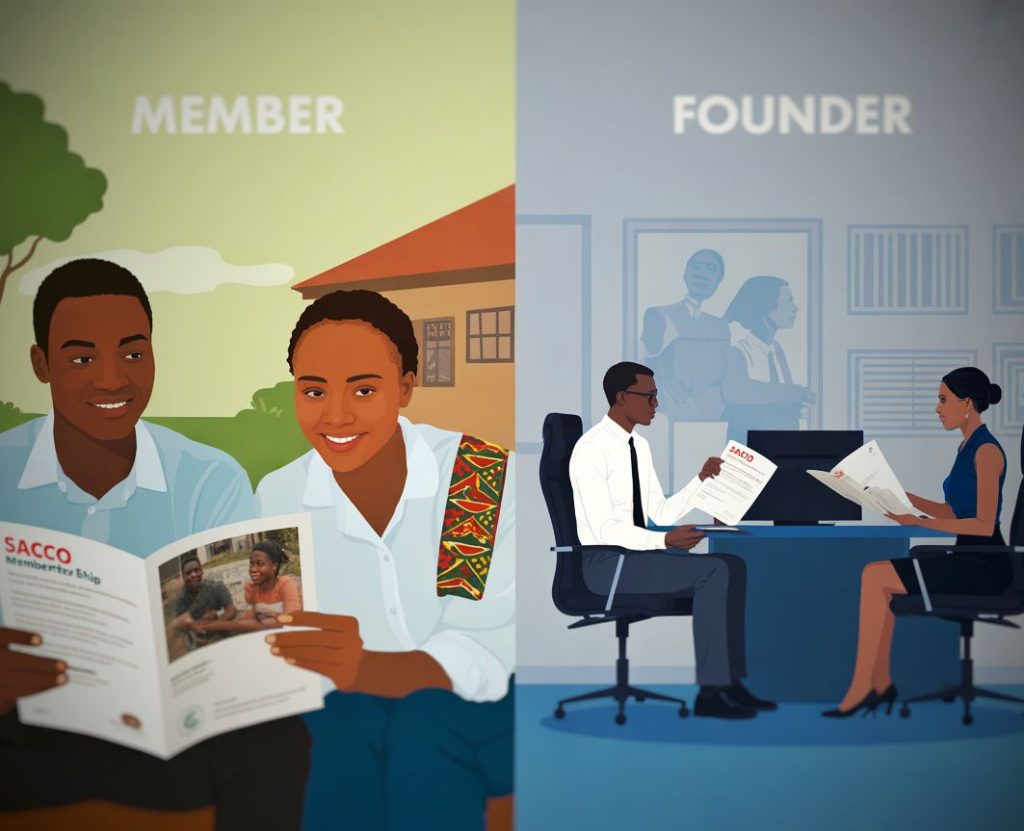
For Founders
- Raise minimum Ksh 10M core capital.
- Draft a compliant constitution & bylaws.
- Establish governance bodies (Board, Supervisory, AGMs).
- Apply for a SASRA license (see licensing forms).
- Set up FOSA operations.
For Members
- Submit ID, KRA PIN, photo, and application form.
- Pay registration and share capital fees.
- Commit to monthly deposits.
- Confirm SASRA licensing of the SACCO.
- Review services and governance structures.
Conclusion — Why DT SACCOs Matter in Kenya
A DT SACCO in Kenya offers the best of both worlds: the cooperative spirit of saving together and the convenience of bank-like services. For founders, starting a DT SACCO requires careful planning, compliance, and significant capital. For members, joining a DT SACCO means affordable credit, flexible savings, and competitive dividends — provided the SACCO is well-governed and regulated.
Takeaway: Always verify SASRA licensing, understand the financial commitments, and choose a SACCO that matches your financial goals.